Strengthening Ukraine’s Defense: A Joint Effort with the EU

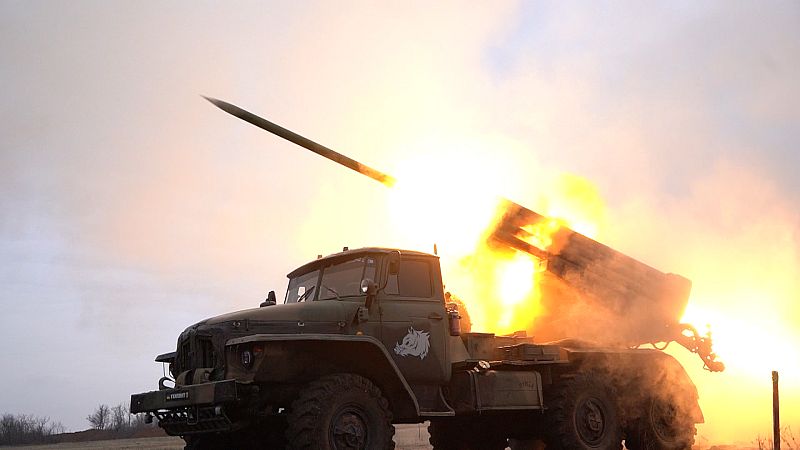
Strengthening the defense capacities of Europe and increasing military aid to Ukraine have become key focuses for the EU’s administrative body.
Following Russia’s attack on Ukraine starting in February 2022, the European Union has offered substantial financial, humanitarian, and military backing, constituting over fifty percent of global aid directed towards Ukraine. The cumulative value of EU military aid totals approximately 49.3 billion euros, with participating countries—excluding Hungary—committing to keep providing weapons. Nations such as France and the United Kingdom have discussed possibly deploying their forces to Ukraine post-conflict; however, this idea continues to be highly debated.
Lacking a cohesive military force, the European Union depends on NATO for protection, as 23 EU member states are also part of this alliance. Nonetheless, American military expenditures make up about sixty-six percent of the combined defense spending by other NATO nations.
As concerns grow over the possibility of reduced American engagement, the EU endorsed the "ReArm Europe" initiative in March with the objective of raising 800 billion euros for defense purposes by the year 2030.
It is anticipated that European defense initiatives will require considerable time before they come into fruition. In the interim, numerous experts contend that backing Ukraine remains vital for ensuring Europe's safety. Soldiers such as Arthur, who serves as a deputy commander in the 38th Brigade, emphasize that this struggle transcends Ukraine’s sovereignty and pertains to the broader security landscape of Europe. Arthur cautions against accepting a ceasefire that merely freezes the current state of conflict; he argues that doing so might not resolve the territorial disputes at hand and could potentially embolden Russia to make additional land grabs, thereby threatening Europe’s overall stability.
Maksym, a Ukrainian civil-cooperation officer, echoes this, emphasizing that yielding to Russia's territorial demands would only leave Ukraine vulnerable to further invasion of the country. Several European leaders share the concern that Russia’s ambitions extend beyond Ukraine.
The result of the conflict will significantly impact Europe. However, with the EU being sidelined during the current peace negotiations led by Washington and Moscow, can it still exert influence over the situation?
According to Steven Everts, the director of the EU Institute for Security Studies, the optimal approach for the EU is to keep backing Ukraine and avoid any accords that could compromise Ukraine’s territorial integrity or sovereignty.
Everts recommends several actions the EU could implement, including offering improved training for Ukrainian soldiers inside Ukraine and boosting their air defenses to counter Russian attacks. Regarding the deployment of European forces on the ground, he cautions against framing it as a peacekeeping operation. "We are not impartial in this conflict; we stand with Ukraine," states Steven Everts. He emphasizes that the focus should be on strengthening Ukraine's ability to protect itself, which encapsulates his main point.