Indonesia's Danantara Fund Under Constitutional Scrutiny Over Corruption Allegations

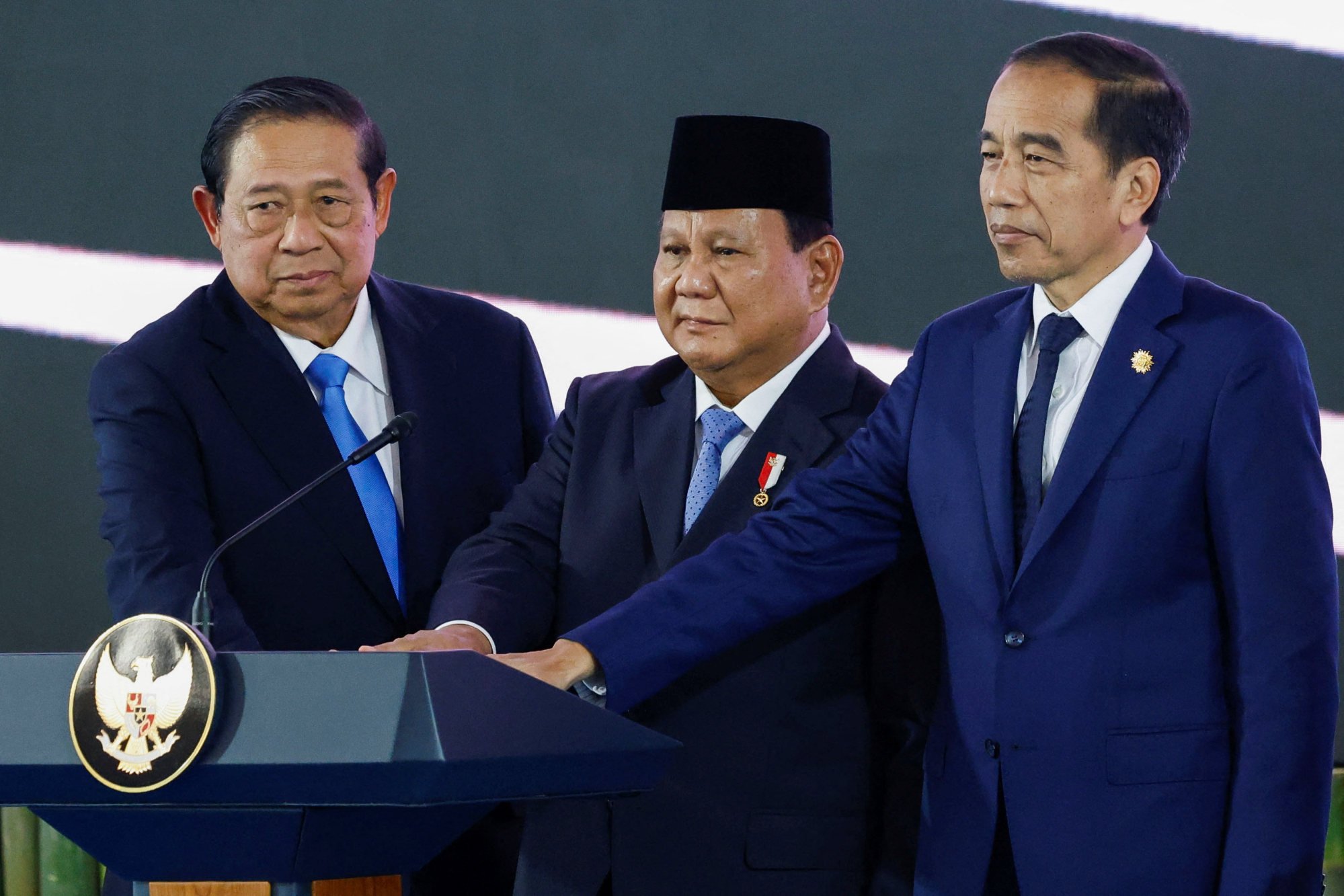
Indonesia ' s recently introduced sovereign wealth fund, Danantara This situation has led to a constitutional challenge, as the plaintiff contends that the newly enacted legislation setting up the fund has "drastically altered" the position of state-owned enterprises (SOEs), potentially hindering efforts to monitor and prevent corruption.
Specialists indicated that the case highlighted significant legal uncertainties regarding the independence of State-Owned Enterprises (SOEs) from governmental control. This legislation aims to tackle these issues; however, critics contend that it might diminish public oversight, thereby fostering worries about openness.
Besides functioning as a sovereign wealth fund, Danatama also serves as an ultra-holding company tasked with overseeing all of Indonesia’s state-owned enterprises. In comparison, Singapore 's Temasek Holdings, and Malaysia Khazanah Nasional Berhad initially received funding of $20 billion and strives to reach a net portfolio value of around $900 billion.
Are you looking for insights into the most significant issues and global developments? Find your answers here. SCMP Knowledge Our latest platform offers handpicked content including explainers, FAQs, analyses, and infographics, all provided by our acclaimed team.
A petition submitted to the Constitutional Court on March 20 aims to invalidate Law No. 1-2025, enacted to establish Danantara and ratified by President Prabowo Subianto In February, the argument was deemed unconstitutional. The petition contends that this legislation severs both financial and legal connections between state-owned enterprises (SOEs) and the government. This could weaken public scrutiny and facilitate corrupt practices.
The plaintiff, Rega Felix, who is an Indonesian citizen, asserted that it had significantly altered the interpretation and character of state-owned enterprises (SOEs).
According to Indonesia's constitutional framework, the court has the authority to annul any laws that conflict with the nation's charter. Should the judges rule that the legislation is not in line with the constitution, Danantara's prospects may become uncertain.
Rega quoted passages from the legislation in his plea, including one which read, "The funds and resources of an SOE exclusively belong to it, with its gains and deficits not being considered as earnings or shortfalls for the government."
He contended that by officially detaching State-Owned Enterprises (SOEs) from the government, the legislation opened up a legal gray zone. This could potentially protect officials from being prosecuted under anticorruption laws usually enforced against public bodies, thereby intensifying the already widespread corruption within the industry.
"Detaching SOEs entirely from the state would prevent corrupt officials within these entities from being charged under anti-corruption laws for misconduct or theft," the petition stated.
A legal expert and attorney named Muhammad Raihan Nugraha stated that following the enactment of the 2020 Omnibus Law during the tenure of former President Joko Widodo , SOE finances were independent of state funds.
Nevertheless, there have consistently been two potential legal readings of this matter because a statute from 2003 also specifies that separate components of the state could still be considered as part of the treasury.
In collaboration with Parliament, the government drew up the new 2025 legislation aimed at superseding the outdated 2003 regulations concerning State-Owned Enterprises (SOEs).
Additionally, the 2013 decision made by the Constitutional Court clearly asserts that assets owned by state-owned enterprises formed part of the national treasury.
Gigih Prihantono, an economist from Airlangga University in Surabaya, expressed his belief that the legislation aims to offer "clarity under the law" for senior officials within state-owned enterprises, who frequently face potential legal action due to allegations of corruption.
"The previous legislation restricted our state-owned enterprises' commercial activities, potentially affecting their competitive edge," he noted, referring to the bribery allegations faced by PT Antam, an Indonesian SOE involved in precious metals.
In 2024, a corruption tribunal found several executives from PT Antam guilty for selling 7 metric tons of gold bars at below-market rates to businessman Budi Said. Said received a sentence of 15 years due to his involvement in these fraudulent acquisitions.
Gigih pointed out that a private-sector company can choose to offer discounts to its customers based on its own judgment. However, for PT Antam, being a State-Owned Enterprise (SOE), providing such discounts was viewed as financial misconduct leading to losses for the government.
However, he acknowledged the public's doubts about the new legislation, taking into account the intricate connection between state-owned enterprises and nationalism in Indonesia.
Traditionally, many of our State-Owned Enterprises (SOEs) originated from Dutch multinational corporations that controlled our economy for hundreds of years, until President Sukarno chose to nationalize them.
Even though Indonesia achieved complete independence from the Dutch in 1949, its economy continued to be shaped by large Dutch corporations that had been active during the colonial era. From 1957 to 1959, the Indonesian administration took control of significant Dutch-owned and other international businesses as part of an effort toward achieving greater economic autonomy.
Hence, there is always tension when the government attempts to alter the framework of state-owned enterprises, despite it potentially making sense from a business perspective.
However, as an economist, Gigih expressed more worry over a provision in the new legislation that granted the president the power to designate which industries would fall under state business monopolies.
The Indonesian Constitution mandates that crucial public utilities—including electricity, railroads, fuel production, and clean water—must stay under governmental oversight.
Previously, all SOEs were accountable to the Ministry of SOEs, but with the new legislation, the recently established superholding company Danantara falls directly under presidential jurisdiction, reducing the ministry’s role to merely advisory.
He contended that each occupying presidential role might lack the required economic knowledge to oversee intricate state enterprises.
Gigih stated that if the court decided against separating SOEs from state finances, the reform initiatives might face obstacles.
It would be unfortunate if creativity in how our state-owned enterprises operate gets suppressed due to the fear of experimenting with new ideas.
When asked about the potential for increased corruption within state-owned enterprises due to the new law, he stated that there will inevitably be gaps, regardless of how strict the system may be.
In 2024, the Corruption Eradication Commission stated that the majority of the cases they addressed were linked to State-Owned Enterprises (SOEs).
Early this year, Pertamina, which handles fuel production and distribution as Indonesia's state-owned enterprise (SOE), faced criticism after it was revealed that its executives were involved in manipulating RON 92 gasoline. This manipulation resulted in the sale of a substandard product to consumers over several years.
However, Gigih mentioned that we ought to consider the bigger perspective.
After closer examination, we found that 80 percent of the alleged corruption cases within our SOEs actually amounted to mere business losses instead of proven attempts to deceive the government.
The judicial examination of the new legislation in Danantara is awaiting a scheduled hearing at Indonesia's Constitutional Court, where decisions often require almost twelve months.
More Articles from SCMP
A 'century baby' from China who was born at midnight on January 1, 2000, passed away due to a heart attack at the age of 25.
Andrea Atzeni’s ambitions remain ever hopeful in the Chairman’s Trophy campaign.
Revellers at the Hong Kong Sevens move from Wan Chai to Kowloon’s foodie paradise.
China's impressive victory over GB prevents them from being labeled as 'the worst team' at the Hong Kong Sevens.
The article initially appeared on the South China Morning Post (www.scmp.com), which serves as the premier source for news coverage of China and Asia.
Copyright © 2025. South China Morning Post Publishers Ltd. All rights reserved.